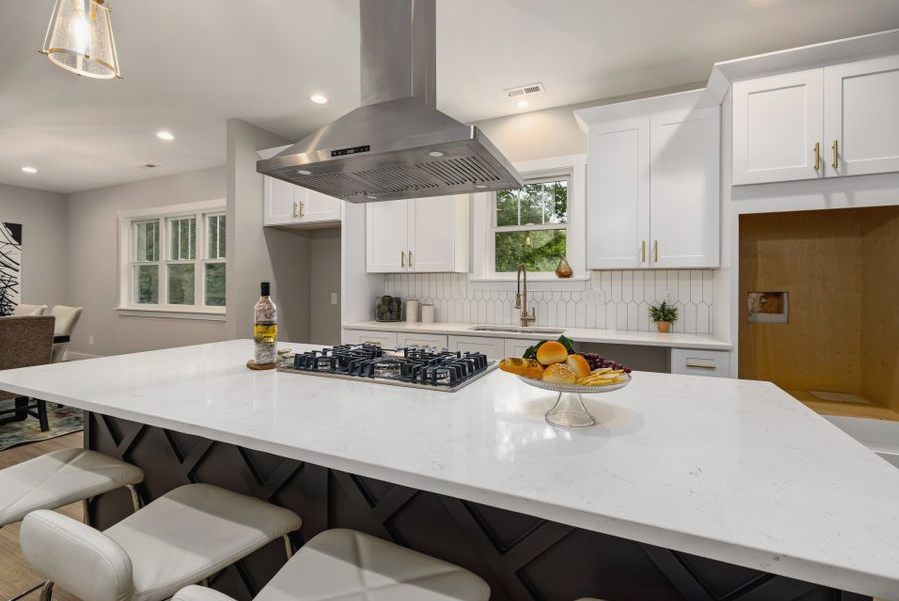
Signs the room needs attention now
The clearest signal is something that has stopped working: a cabinet door that will not close, a countertop that is delaminating, or veneer or laminate peeling off the cabinet boxes. Water damage under a sink from a slow leak nobody caught is another one that does not wait. If the finish is worn through to bare wood or the veneer is bubbling, refinishing will not fix it cleanly. You are looking at refacing or replacement. A layout that fights you every day also belongs on this list, because that cost never stops.
Floors and walls are a different category. If the floor flexes near the sink or refrigerator, or the cabinets are pulling away from the wall at the top, the problem is under or behind the cabinets, and new doors will not touch it. When the old cabinets come off, a wall or floor that looked fine sometimes turns out not to be.
When it can hold off a while longer
If the cabinet boxes are sound and what bothers you is the color or the hardware, that is cosmetic. Refinishing is the right call when what you have works but looks dated. The same goes if the layout works and the plumbing and electrical are in reasonable shape. You do not have to move the sink or the range to make the room better. New finish, new hardware and possibly new countertops can carry a fifteen-year-old kitchen a long way.
If you expect to sell within a few years, a full gut remodel is hard to justify unless the room is failing. We will tell you that when we look at the space, even if it means a smaller job for us.
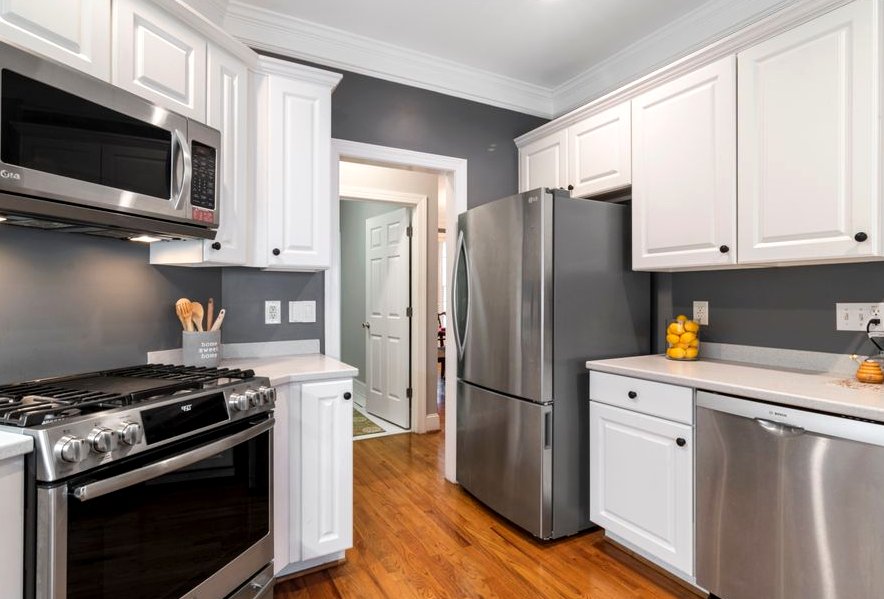
What a 2006 house tells us before we open anything
A kitchen from the mid-2000s is old enough that the finishes are tired but the layout is usually still reasonable. That is why refinishing and refacing come up so often on these jobs. The cabinets are not always what is wrong. Often it is the surface.
What we check carefully is anything water has touched. Freeze/thaw cycling stresses pipes in this climate, so if there has ever been a leak under the sink, we look at the cabinet floor, the supply lines and the wall behind them before quoting. Damaged material gets replaced. Covering it with a new finish only hides it for a while.
Why the plumbing and electrical come first
Rough plumbing and rough electrical get finished, and the required inspections get done, before any cabinet is installed or any countertop is cut. Once the cabinets are in, reaching the lines in the wall means tearing out what you just paid for. If the sink supply lines need replacing, that is priced as its own scope before we start.
When the rough-in is signed off, we set level and plumb layout lines with a rotating laser before the first cabinet goes up. We then locate the studs and mark cabinet positions and screw locations before drilling pilot holes. A base that is off shows up later as sticking doors and gaps at the countertop seams, and the laser lets us catch it before anything is fastened.
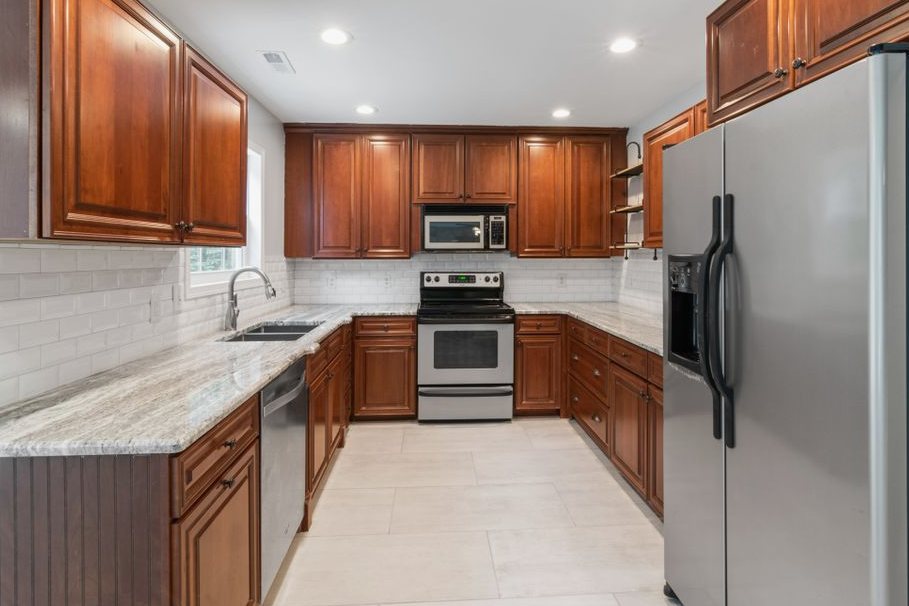
Refinishing or refacing: what each costs
You do not need to have anything picked out before we talk. We look at the structure and the rough-in first, then talk about finishes and budget.
For existing cabinets there are two main paths. Refinishing keeps the doors and boxes and typically runs $1,900 to $4,500. Refacing puts new doors, drawer fronts and a new surface on the existing boxes and typically runs $4,270 to $10,200. The results differ, and so does the right choice. It depends on the condition of your cabinet boxes. We can give you a typical range over the phone, and we confirm the exact number once we have seen the kitchen.
Other Services We Offer
Typical Castle Rock Pricing
Plan around these figures, and you get a written price for your own job before you commit.
$1870–$4400
Straightforward Pricing
(720) 640-0950Call us with the details you have, with no sales pitch.
Book an EstimateUpdated October 2026