The Decisions That Set the Job
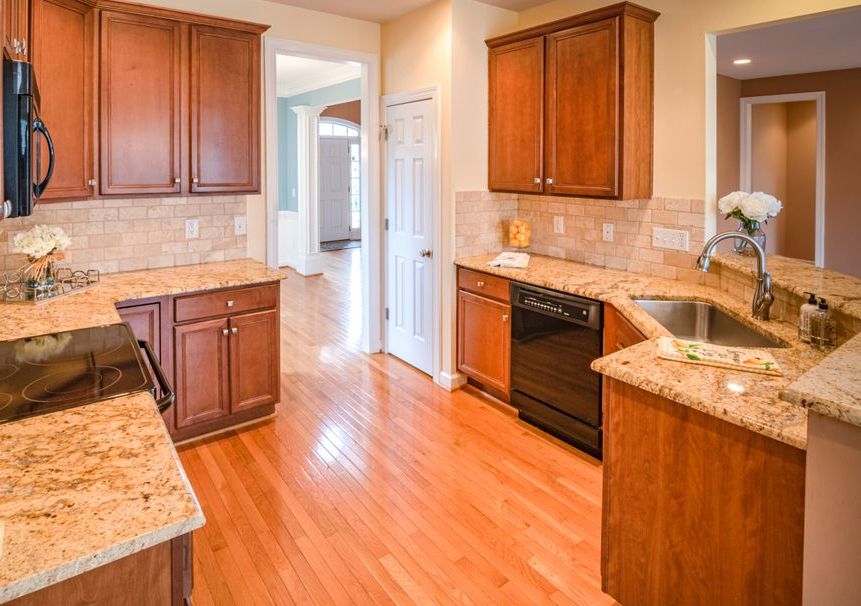
The choices come in a set order, because each one changes the next. Layout and size come first: the length of the run, the depth, and how far the top hangs past the cabinet face. That last number is the overhang, and you see it every time you stand at the counter.
Then the sink. A drop-in sits on the surface with its rim showing. An undermount hangs from the underside of the top, which changes the order of work on set day (more on that below).
Material, edge and seam placement come after that. A seam is where two pieces of top meet. A long run will have at least one, and we decide where it lands before anything is cut instead of letting it fall wherever the pieces run out.
Measuring and the Wall Line
Before we cut anything we check the cabinet tops for level and look hard at the wall the top will meet. Walls are rarely straight, and neither are cabinet runs once a house has been lived in a while. A top cut square to a wall that isn't square leaves a gap that opens and closes along its length, and the countertop is the part that shows it.
Seam location, overhang, the sink and faucet cutouts, and the edge profile are all settled up front.
Hard winter freezes here mean freeze/thaw cycling that stresses foundations, slabs and pipes. Houses move a little because of it. So we check how the cabinets are actually sitting and where the wall truly runs, and we don't assume the room is square because it looks square.
Set Day: What Happens in Your Kitchen
Removal comes first. The pry bar does the lifting, and the utility knife cuts through the caulk and sealant lines so the old top releases cleanly. Old tops are heavy and awkward, so we take our time with this part.
Then the dry fit. We set the new sections in place with no adhesive and check the wall fit, the overhangs, the alignment where edges meet, and any seams. If something is off, we find it at this stage, while it can still be corrected.
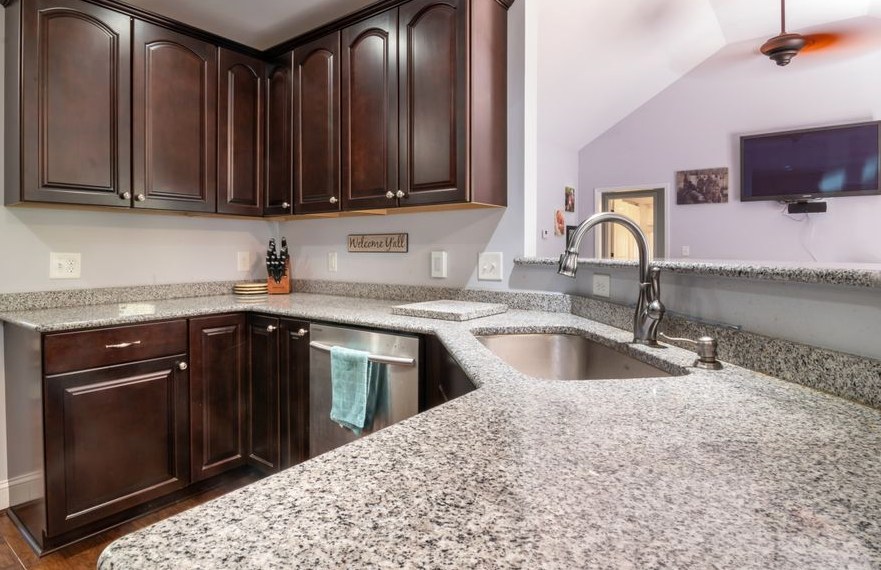
For an undermount sink, we attach the sink to the underside of the countertop with the specified posts, brackets and silicone before the section moves into final position. Trying to hang a sink under a top that's already set is a bad time for everyone.
Once the fit is right, adhesive goes down and the sections go into their final position.
What It Costs
Removal of the existing countertop typically runs $50 to $300. On the phone we can give you a typical range for the whole job, and we confirm the exact number once we've seen it.
The final price depends on the material you choose, the surface area, the number of cutouts, the edge profile, how many seams the run needs, and whether the sink is a drop-in or an undermount that has to be fastened underneath. A short, single-section run with no sink work sits at the low end. A long run with seams, a sink cutout and an involved edge sits higher.
Our written quote lists the material, the linear measurement, the seam locations and the sink arrangement, so you can see what each piece costs and where the number could move.
How Long the Job Takes
The time on site depends on the run. The day follows a fixed sequence: remove the old top, dry-fit and check, mount the sink if it's an undermount, then adhesive and final set.
A straight run with no sink cutout and no seams is a shorter day than a long run with a sink and two seams that have to line up. We'll tell you which one you have, and give you the schedule, when we measure.
Signs the Old Top Is Done
Look for seams that have opened up, or caulk at the sink rim that won't stay put no matter how many times it's redone. Edges that have swelled, chipped or come loose from what's under them are another sign. So is a top that has pulled away from the wall, leaving a visible line where it used to meet, or flex near the sink when you lean on it.
None of these fix themselves, and a couple get worse fast. If you're seeing one, we'll come out, measure, and tell you what it takes.
How It Works
Spelled out, the job breaks down like this:
- Where sections meet, shim beneath the seam as needed, apply seam adhesive, bring the pieces together evenly, and remove excess adhesive after it begins to set.
- Shut off the sink water supply and disconnect the faucet supply lines and drain trap before removing the existing countertop.
Other Services We Offer
Typical Castle Rock Pricing
Treat these figures as a planning guide, and the price for yours gets written down before work begins.
$100–$300
Straight Answers
(720) 640-0950A two-minute call is all it takes, there's no commitment.
Book an Estimate