Signs a cabinet needs repair, not replacing
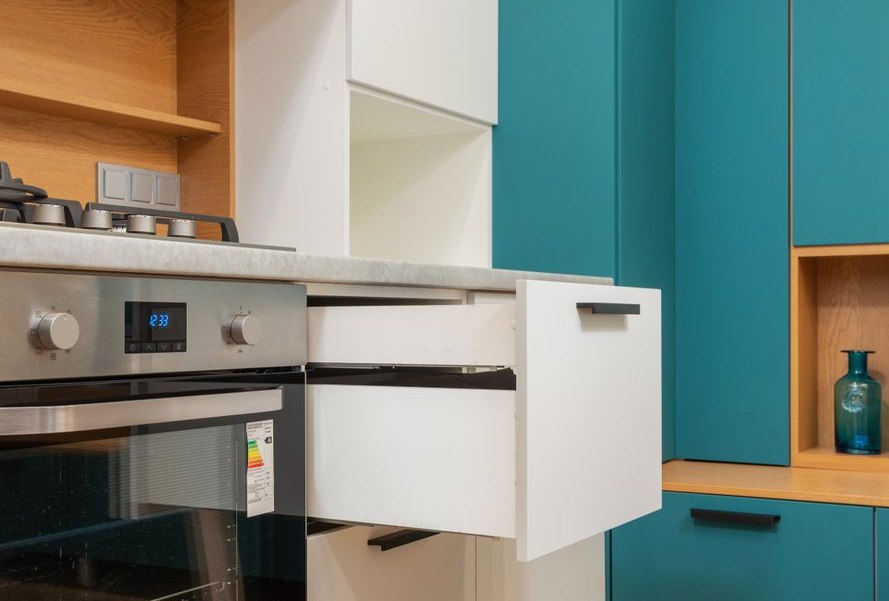
The usual one is veneer lifting at a corner or along an edge. You can slide a fingernail under it, and it catches on a sleeve every time you walk past. Next is a surface crack or void, a chip or gap in the face or frame that wasn't there a few years ago. Third is the drawer that sticks, rides crooked, drops at the front when pulled out, or won't close all the way. That points us to the slides first.
Strong freeze and thaw cycling at our elevation is hard on a house, and cabinets feel it too. A single worn part with the rest of the cabinet still solid is the case where repair makes sense.
What we do to each kind of damage
For lifting veneer, we work adhesive in beneath the loose section, press it back into place and clamp it while it cures. The clamp stays on until the glue has set, and only then do we sand. Sanding too early is how a good repair gets ruined, so we don't rush that part.
For surface cracks and voids, we fill the damage, let the filler cure, and sand it level with the surrounding face. The goal is a surface you can run a hand across without finding the patch.
For drawers, we pull the old slides, using pliers where the hardware is stubborn, and fit replacement drawer slides. Then we check that the drawer runs square, closes fully and doesn't rub the cabinet next to it.
What it costs and what moves the price
Cabinet repair runs $120 to $350 per cabinet. On the phone we can give you a typical range for what you describe, and we confirm the exact number once we see the cabinets. Where a job lands depends on what's wrong and how much of it there is. A cabinet with veneer lifting in several places plus cracks to fill takes more hours and more cure time than one with a single bad slide, so it prices higher.
Because the price is per cabinet, the total follows how many we touch in your kitchen. If a cabinet is damaged too far to hold a glue line or take filler, we'll tell you when we see it rather than quote a repair that won't last.
Timing and the order we work in
We don't promise a set number of days, because the clock is mostly the adhesive and filler cure time. A cabinet with veneer, cracks and a drawer problem has more cure stages than one with just a bad slide, and a slide swap is the quick end of the range.
On the day, we look at each cabinet and work out why it failed before we touch it. Glue work goes first so the clamps can sit while we fill elsewhere. Drawer hardware goes in last, once the surrounding surfaces are sanded, so we're not putting dust into new slides.
When repair stops and a permit question starts
A repair that stays inside the cabinets is not construction, and it doesn't need a permit. If your home sits in a mapped flood zone and the job grows into more than cabinet repair, that changes. Douglas County requires a floodplain development permit before construction or development in a Special Flood Hazard Area, and floodplain boundaries can change, so check the FEMA flood map for your specific property before work starts. If the scope starts moving past repair, we'll stop and sort that out first.
Our Process
Step by step, the specifics look like this:
- Remove a problem drawer, clean the drawer and cabinet slides, and check for obstructions and loose or damaged fasteners.
- Tighten or replace damaged drawer-slide fasteners; if a slide is damaged beyond adjustment, replace it with a matching slide.
Other Services We Offer
Pricing Ranges
Typical jobs fall somewhere in these ranges, and we'll tell you which end of the range yours is likely to sit at.
$150–$500